CUBIK Studio — Company Summary
CUBIK Studio Limited is a Hong Kong-based startup that helps airlines reduce food waste using camera-based artificial intelligence. A compact device mounts inside standard airline catering trolleys and automatically photographs each meal tray as it returns from passengers. The system identifies exactly what was eaten and what was left behind — down to individual items like "yogurt: 40% remaining" — without any extra work for cabin crew. All data is processed directly on the device with no internet connection required during flight, and the system never captures images of passengers or crew faces.
Key Metrics
- 15% reduction in cabin food waste through smarter menu planning
- 5.3 million tonnes of carbon dioxide equivalent annual reduction potential across global aviation
- 3 million meals redirected from landfill to communities in need annually
- US$36 billion: the total value of airline food wasted globally every year
Business Model
- Subscription fee: HKD 2,000 per aircraft per month
- Revenue sharing: 50/50 split on cost savings achieved from waste reduction
- Target market: Airlines operating fleets of 100 or more aircraft
Technology
- On-device processing: All artificial intelligence runs locally with no cloud or Wi-Fi dependency during flight
- Advanced image recognition: Identifies different food items, liquids, packaging, and leftover portions
- Privacy by design: No facial recognition, no personally identifiable information collected
- Standard hardware: Compact tablet-sized device fits into existing airline catering trolleys
Environmental and Social Alignment
Supports United Nations Sustainable Development Goal 2 (Zero Hunger), Goal 12 (Responsible Consumption and Production), and Goal 13 (Climate Action).


Zero friction.
Total visibility.
Our camera-based system automatically tracks what passengers eat and what goes to waste — without any extra work for cabin crew. The result: smarter catering, lower costs, and less food in landfills.
DEVELOPMENT PARTNER
In Development with a Leading Asian Carrier
Ground Testing in Progress
PROBLEM
The Billion-Dollar Blind Spot

The Data Gap
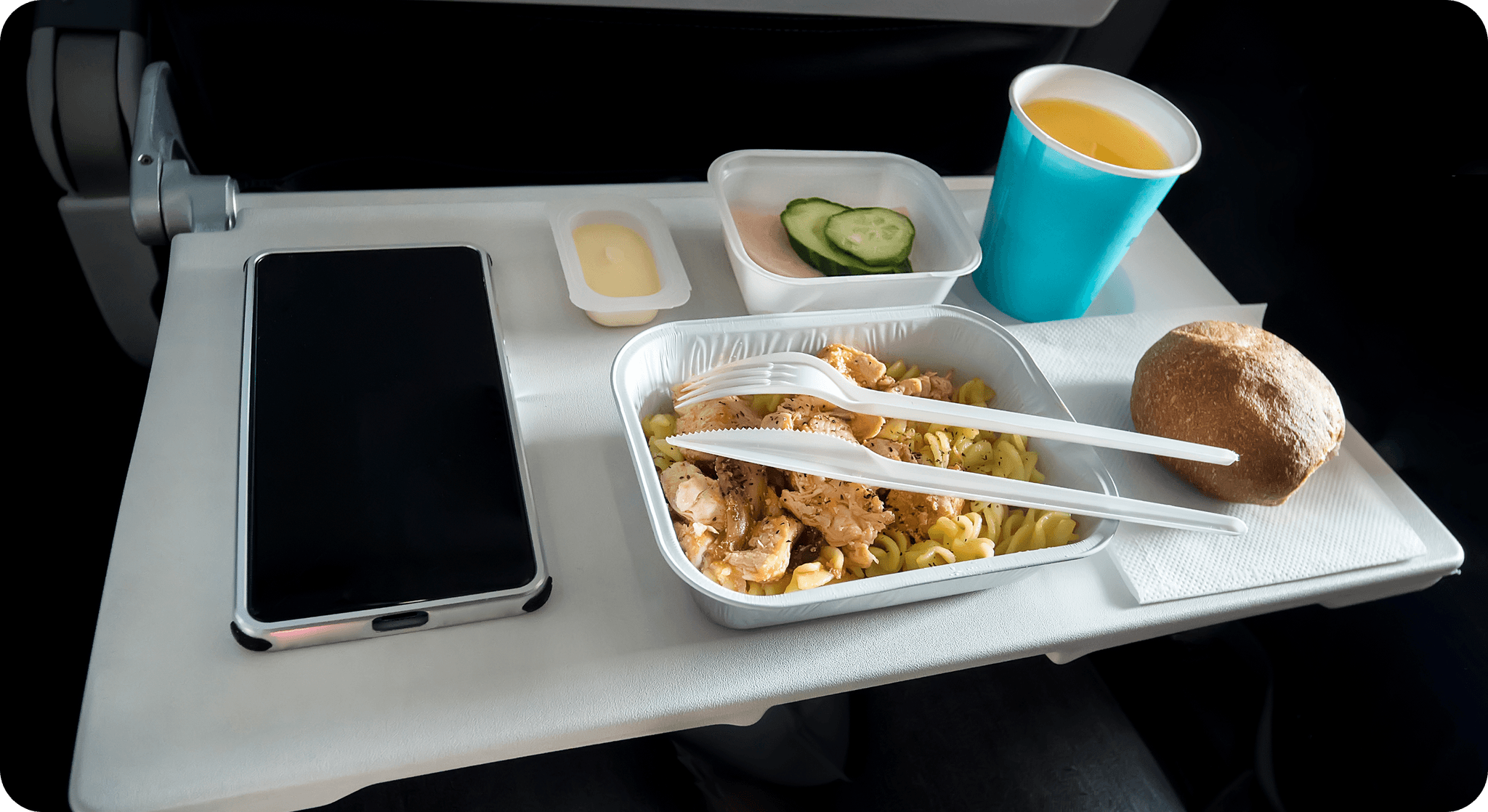
Airlines know how much total waste they produce, but not what specific items are being thrown away — missing the key information needed to cut costs.
The Service Gap
Without knowing exactly what passengers consume, airlines cannot tailor their menus to match real preferences — leading to over-ordering and unnecessary waste.
OUR SOLUTION
Automatic Waste Tracking, Built Into the Trolley


No Extra Work for Crew
A small camera scans each meal tray as it returns to the trolley. No sorting, no manual logging — the system works silently in the background.


Item-by-Item Tracking
The system identifies exactly what was eaten and what remains — down to individual items like "yogurt: 40% left" — giving procurement teams precise data.

Fits Existing Trolleys
A compact tablet-sized device mounts directly into standard airline catering trolleys. No aircraft modifications or new equipment needed.

CORE TECHNOLOGY
Built to Work at 35,000 Feet
Works Without Internet
All data is processed directly on the device — no Wi-Fi or cloud connection needed during flight. This ensures reliability and keeps data secure.
Recognises All Food Types
Advanced image recognition distinguishes between different food items, liquids, packaging, and leftover portions — even in complex tray arrangements.
Privacy by Design
The system only analyses tray contents. It does not capture or store any images of passengers or crew faces.
HOW IT WORKS
From Tray to Insight in Seconds
Tray Returns
Used meal trays return to the galley via the standard trolley
Automatic Scan
The built-in camera captures the tray contents automatically
On-Device Analysis
The device identifies each item and measures how much was consumed
Insights Ready
Detailed consumption data is generated instantly for every tray
Dashboard Sync
After landing, data syncs to the cloud analytics dashboard
Tray Returns
Used meal trays return to the galley via the standard trolley
Automatic Scan
The built-in camera captures the tray contents automatically
On-Device Analysis
The device identifies each item and measures how much was consumed
Insights Ready
Detailed consumption data is generated instantly for every tray
Dashboard Sync
After landing, data syncs to the cloud analytics dashboard

MEASURABLE IMPACT
Operational and Environmental Returns


$0
US Dollars of airline food wasted every year globally
Projected annual reduction in carbon emissions from smarter aviation catering worldwide.
Direct reduction in cabin food waste through data-driven menu optimisation.
Estimated meals saved from landfill and redirected to communities in need.
Supports Zero Hunger, Responsible Consumption, and Climate Action.
RETURN ON INVESTMENT CALCULATOR
Estimate Your Airline's Savings
CUBIK Pricing Model
Total Savings
US$4.9 Million
15% of total waste cost
Your Net Savings
US$2.2 Million
after CUBIK fees
Carbon Dioxide Reduction
6,975
tonnes of carbon dioxide equivalent per year
Meals Redirected
4,000
meals saved from landfill per year
Annual Savings Breakdown (US Dollars)
Estimates are based on industry averages. Actual results may vary depending on airline operations.
STRATEGIC ROADMAP
Defining the Industry Standard
Prototype Phase
Hardware finalised and system interface completed.
Airline Pilot Programme
Ground testing in Hong Kong catering kitchens.
Fleet Rollout
Full integration across long-haul routes.

Ready to optimise your fleet?
Join the future of sustainable aviation catering today.
THE TEAM
Visionaries and Engineers
Moses LAU
Product Manager
Service Design
Brian ANG
Strategy Manager
Enterprise Info System
Hillbe XU
ESG & Finance
Sustainable Finance
Ringo NG
BI Manager
Business Intelligence
Wilson CHENG
IT Manager
Computer Science